UAE — South Korea
A practice built on Jogakbo — the art of gathering fragments into meaning.
To the Place That Held Me · 2025–2026 · SIKKA
Chapter I
Earlier works in which rupture, protection, and resilience appear in more embodied and direct forms, reinterpreted through a distilled and contemporary structural language.
Structural Rearticulations
2026 · DIFC Art Nights
Ceramic · 33 × 30 × 52 cm
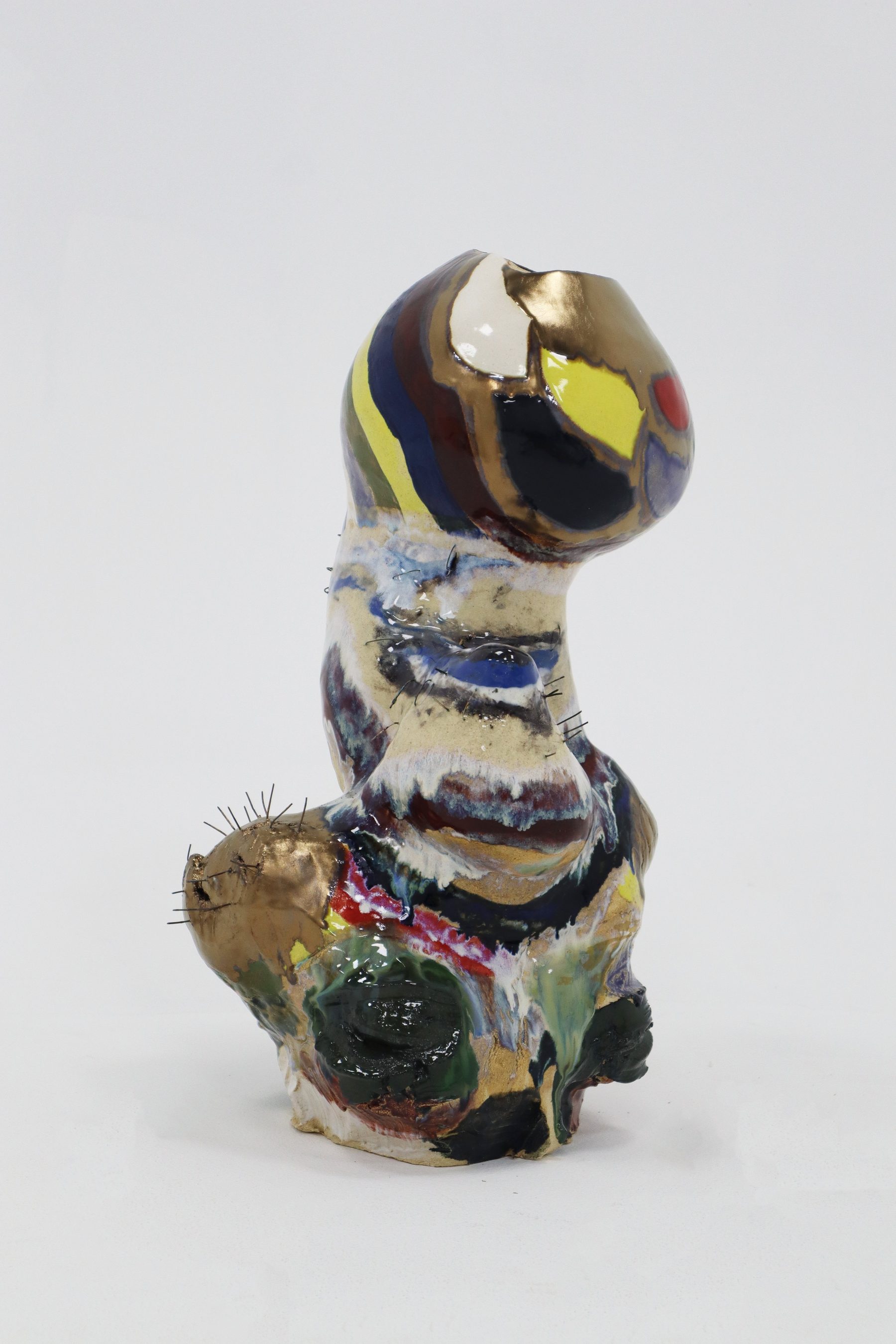
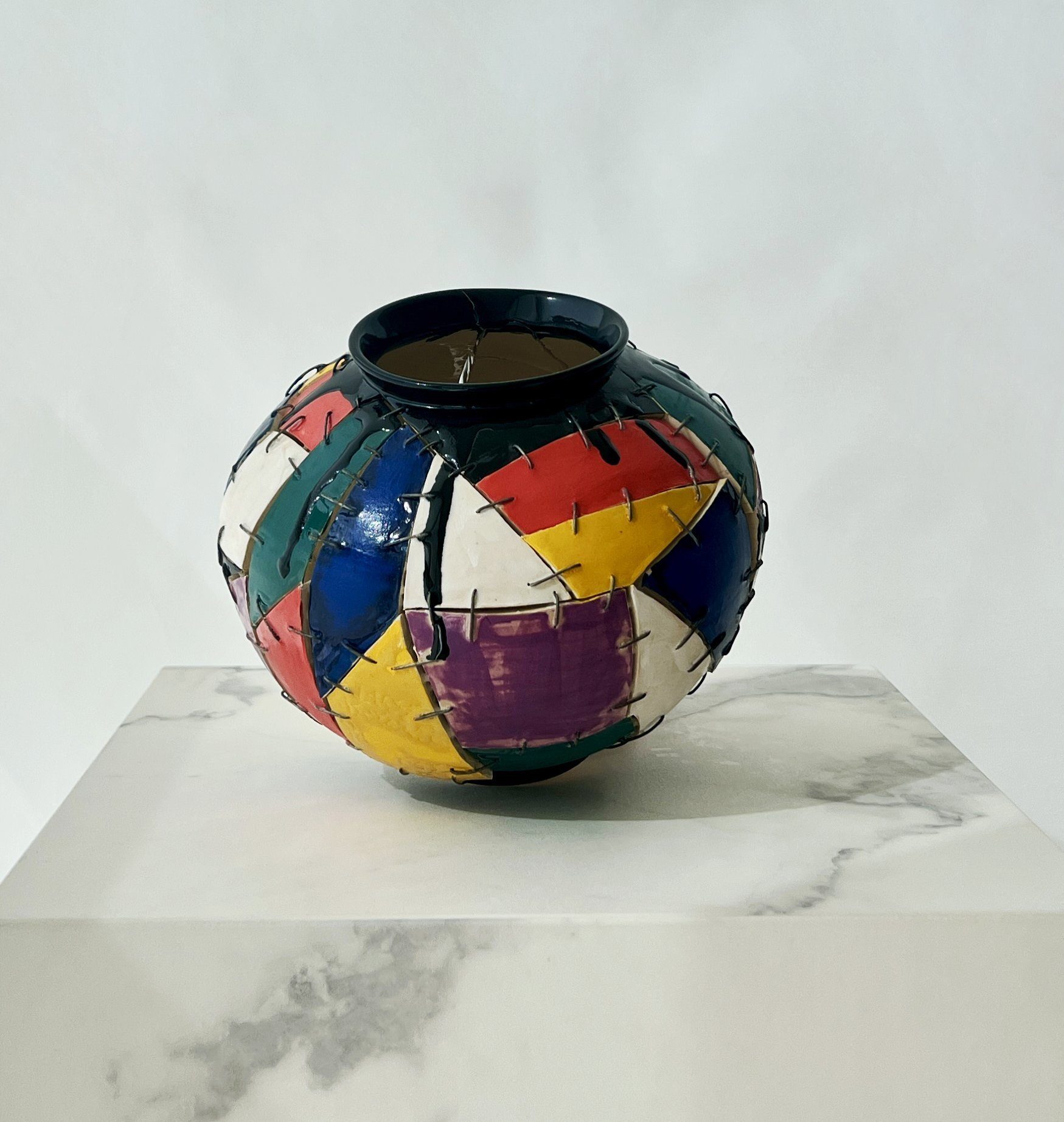
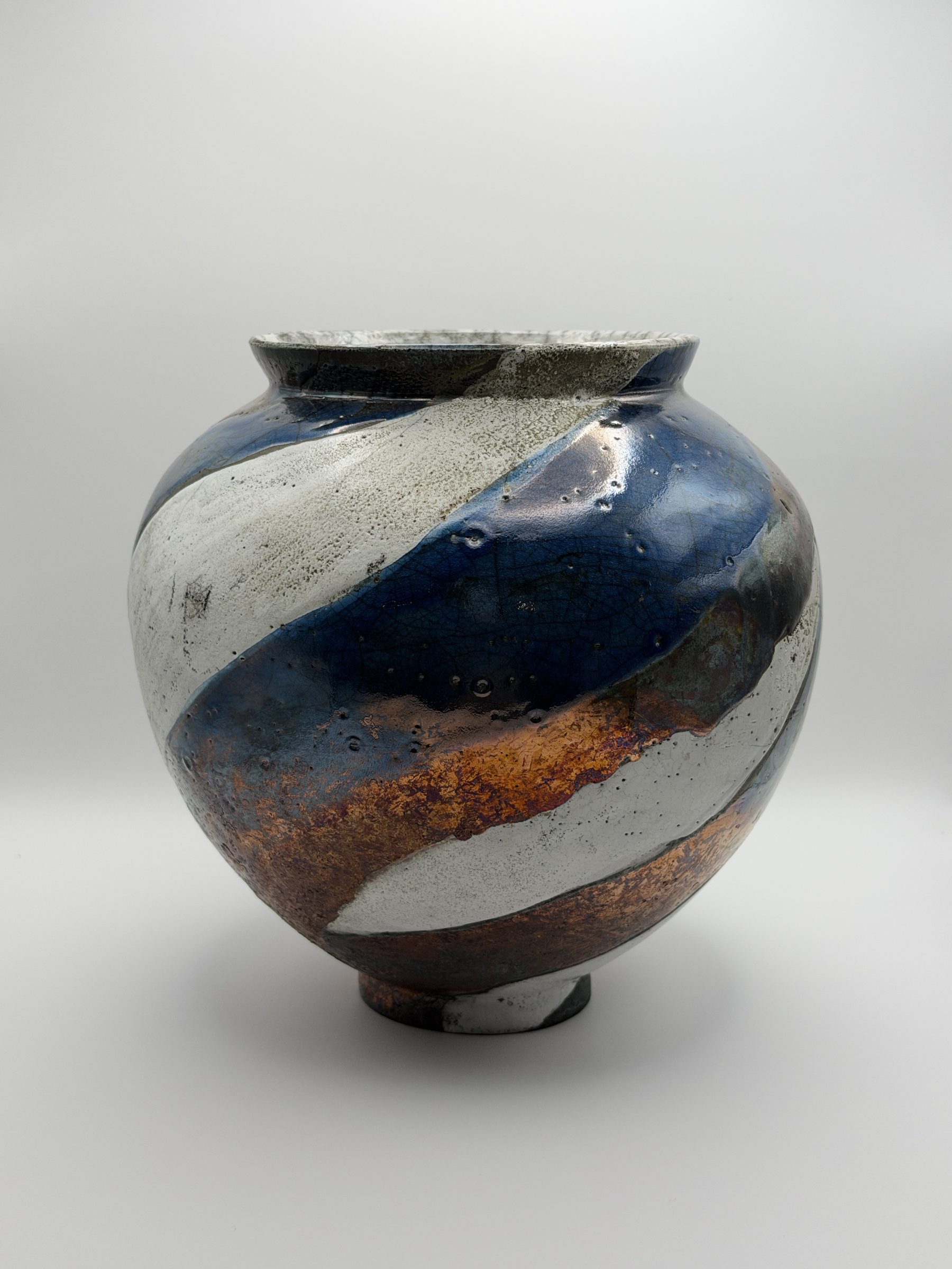
Extends the Self series through layered glazes, shifting color fields, and visible traces of accumulation. The colored patches register different cultural and material registers, while the body of the work holds surfaces that merge, separate, and persist over time. Rather than presenting identity as fixed or complete, the work traces it as a provisional structure shaped through relation, fragmentation, and continuity.
Wire & Gold
Fracture
Surface
2026 · DIFC Art Nights
Ceramic · 33 × 30 × 52 cm
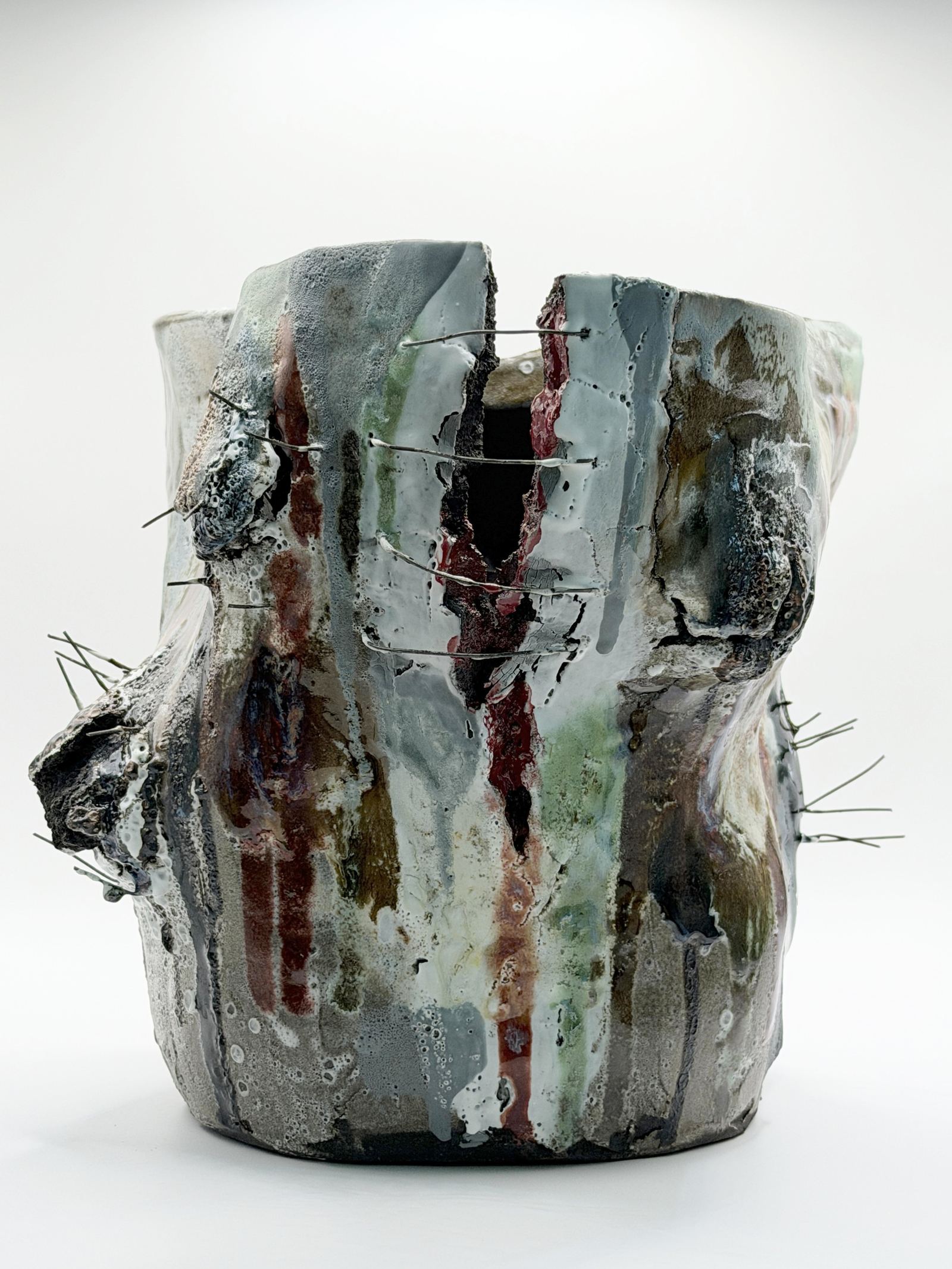
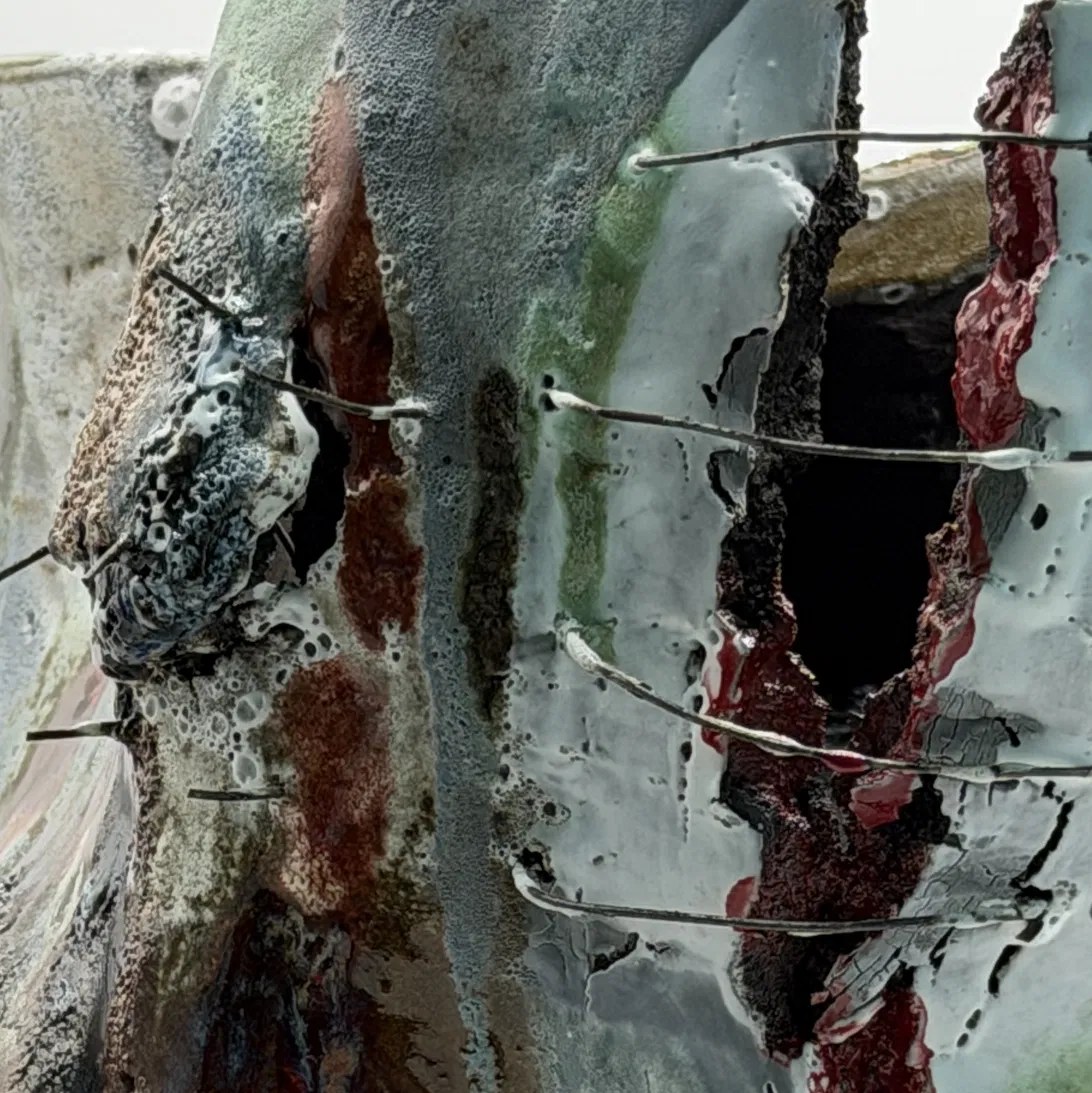
Extends the Self series into a phase defined by rupture and stitching. Its fractured form and exposed wire joins register a self shaped through fragmentation, exposure, and provisional repair. Rather than restoring wholeness, the work holds tension as part of identity's structure.
Rim
Rupture
Side
Embodied Origins
2026 · DIFC Art Nights
Ceramic · 32 × 30 × 25 cm
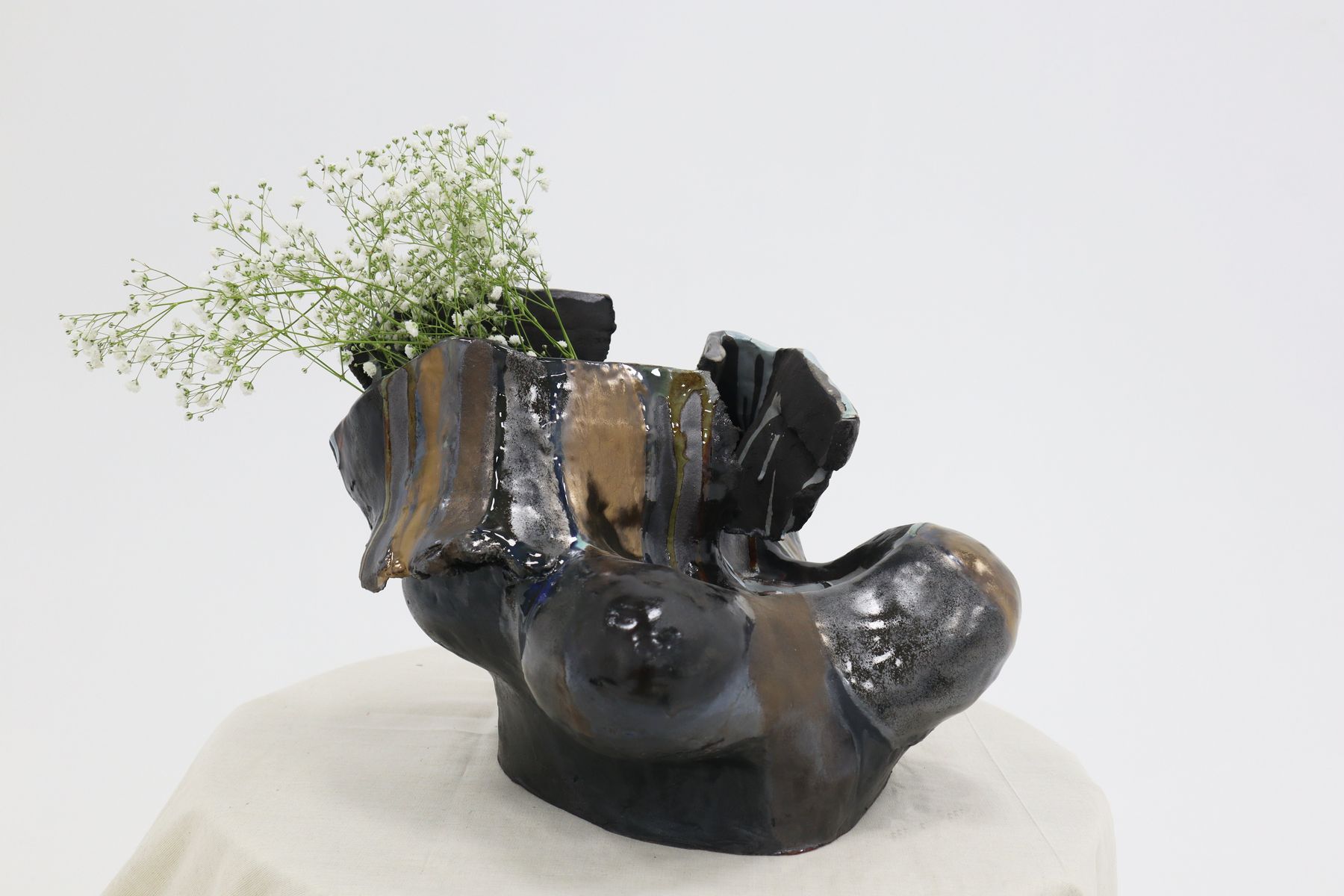
Extends the Self series through a more open and fragmented form. Its surface and structure trace identity not only through accumulation, but through rupture, absence, and change. The work registers a self repeatedly altered by experience, yet still held together through what remains.
2025
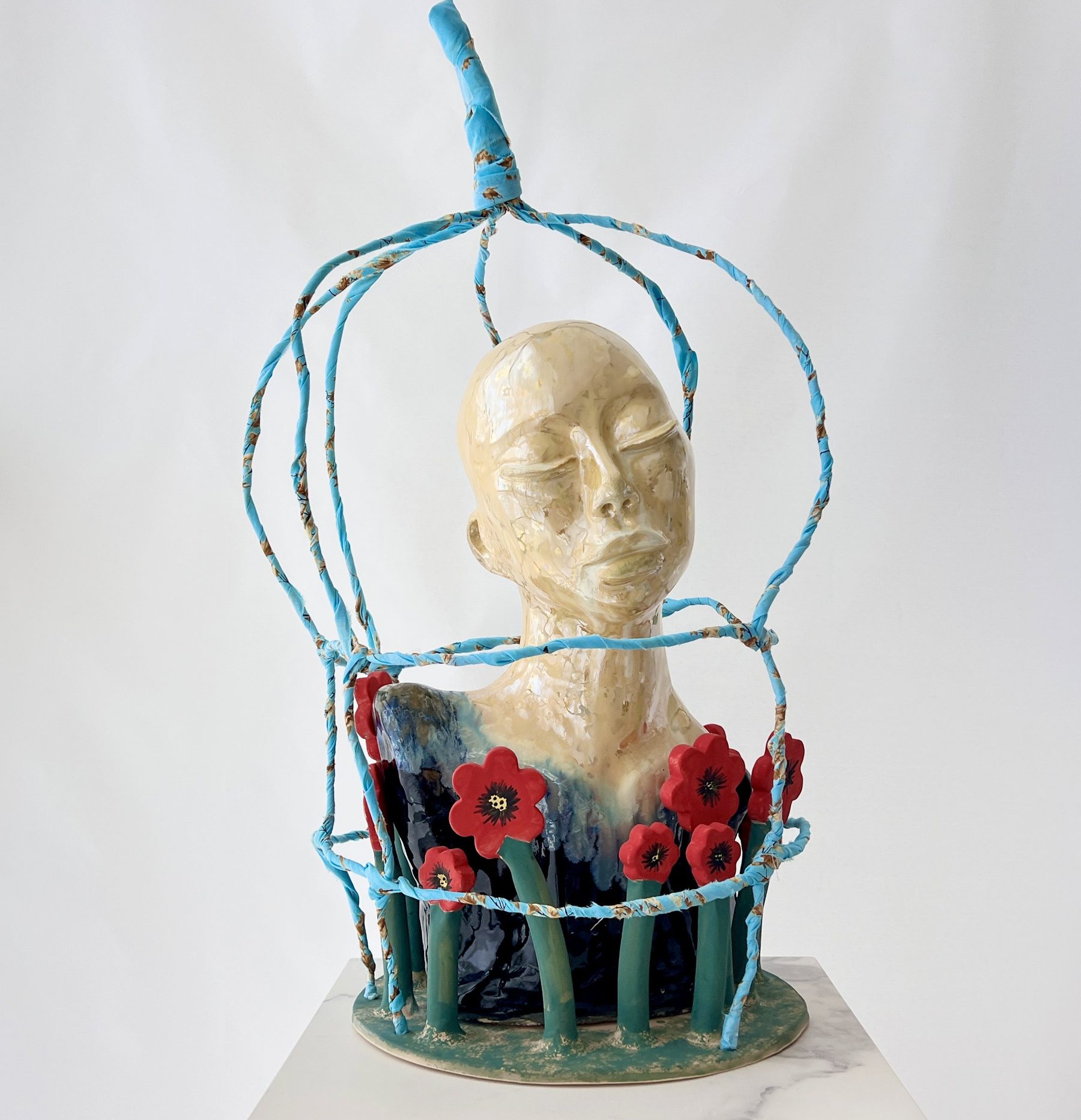
Ceramic, Metal, Cotton · 32 × 51 cm
A female torso resting on a ceramic base, its surface marked with floral gestures that introduce softness, repetition, and restraint. Surrounding the form is a fabric-wrapped structure supported by internal metal wire — asserting enclosure as support rather than confinement. Softness becomes a structural condition; stillness becomes an active form of containment.
2024
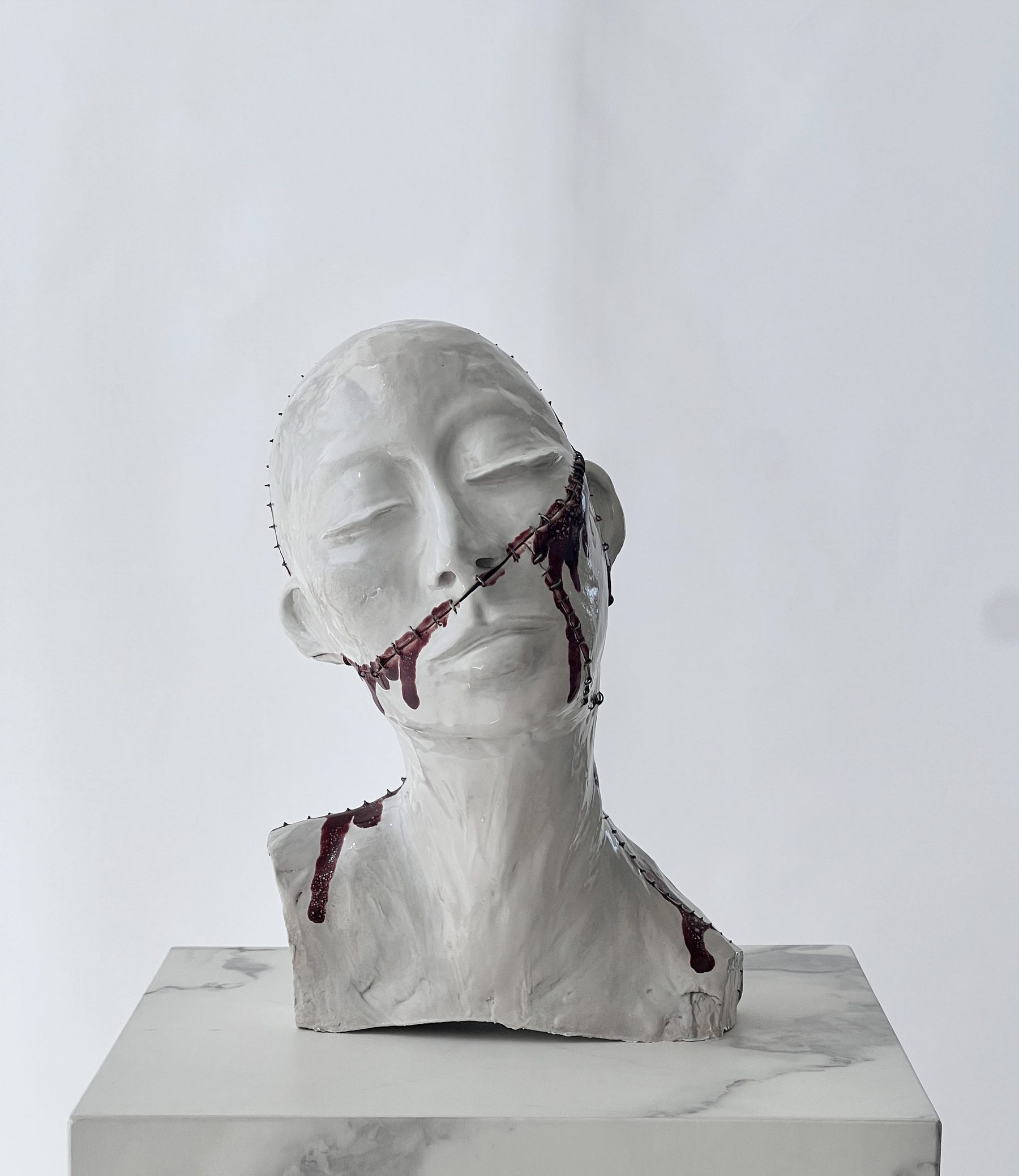
Ceramic · 22 × 36 cm
Marked by stitched seams and darkened traces registering rupture and resilience within the body. Inspired by the structural logic of Jogakbo, the work reconstructs fragmentation through cutting, joining, and visible repair. Rather than resolving fracture, the sculpture holds tension on the surface, allowing the figure to register endurance, instability, and continuity at once.
Stitch
Back
Profile
2024
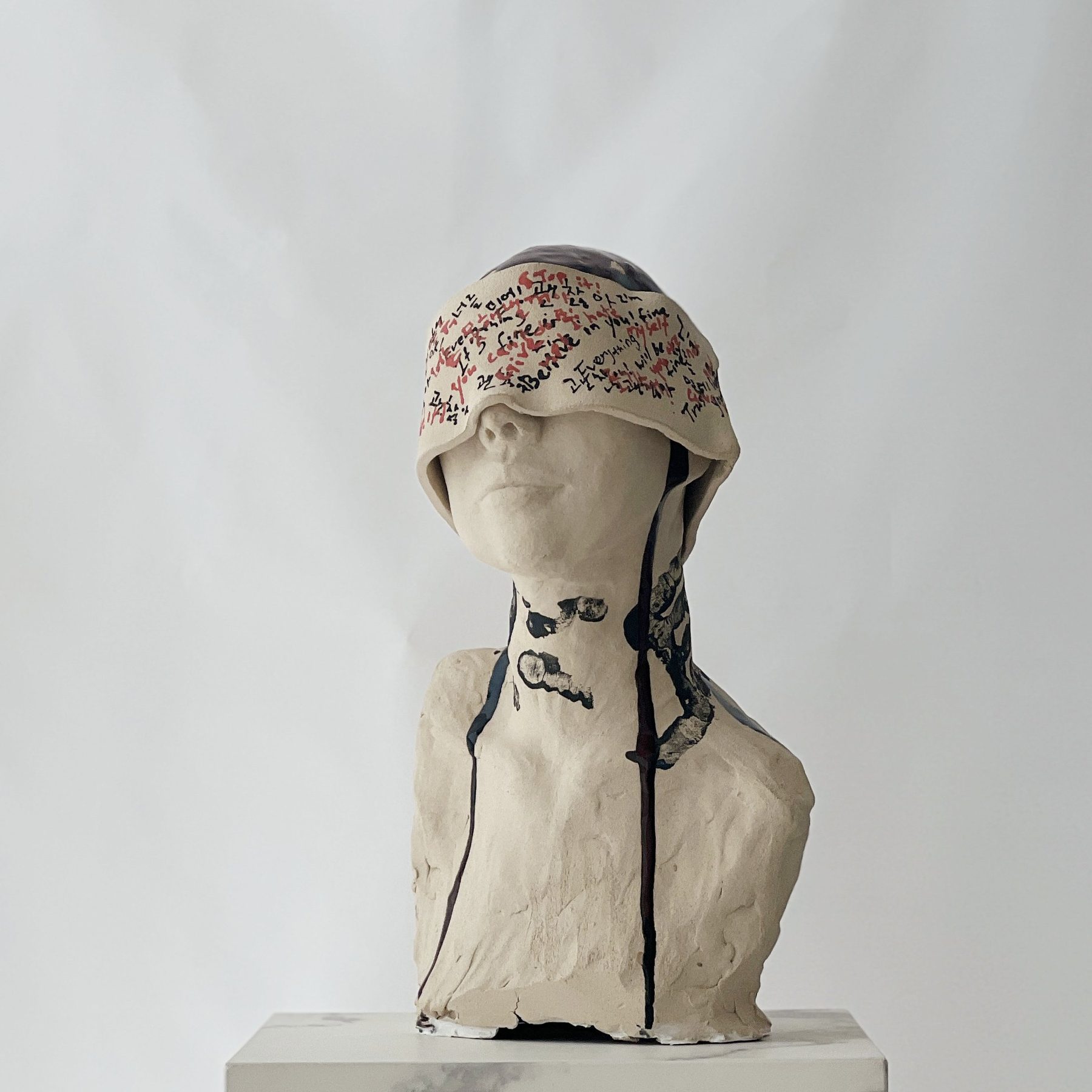
Ceramic · 25 × 46 cm
Turns inward through a restrained and partially obscured figure. The blindfold redirects attention from outward recognition to interior tension, registering resilience through withdrawal, compression, and focus.
2024
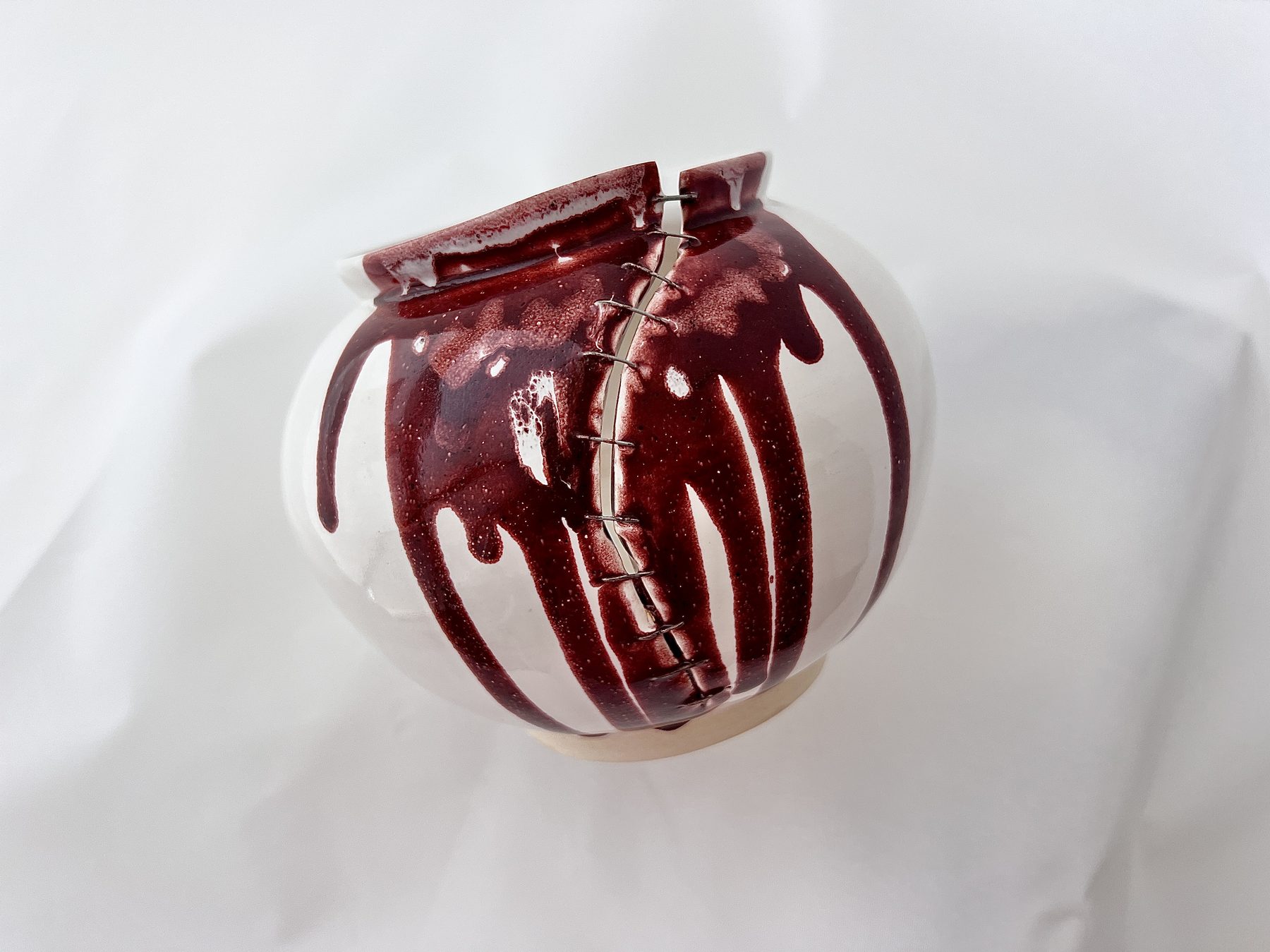
Ceramic · 14 × 17 cm
Moon jar-shaped, establishing the starting point of the Self series. One side retains a coherent, controlled surface, the other split and rejoined with wire — the first moment where repair becomes structural language.
Chapter II
These works trace belonging not as inheritance or arrival, but as something shaped gradually through memory, continuity, and coexistence — encountered as spatial and structural conditions.
2025–2026 · SIKKA Art Festival
Ceramic, Metal, Fabric · 200 × 60 × 185 cm
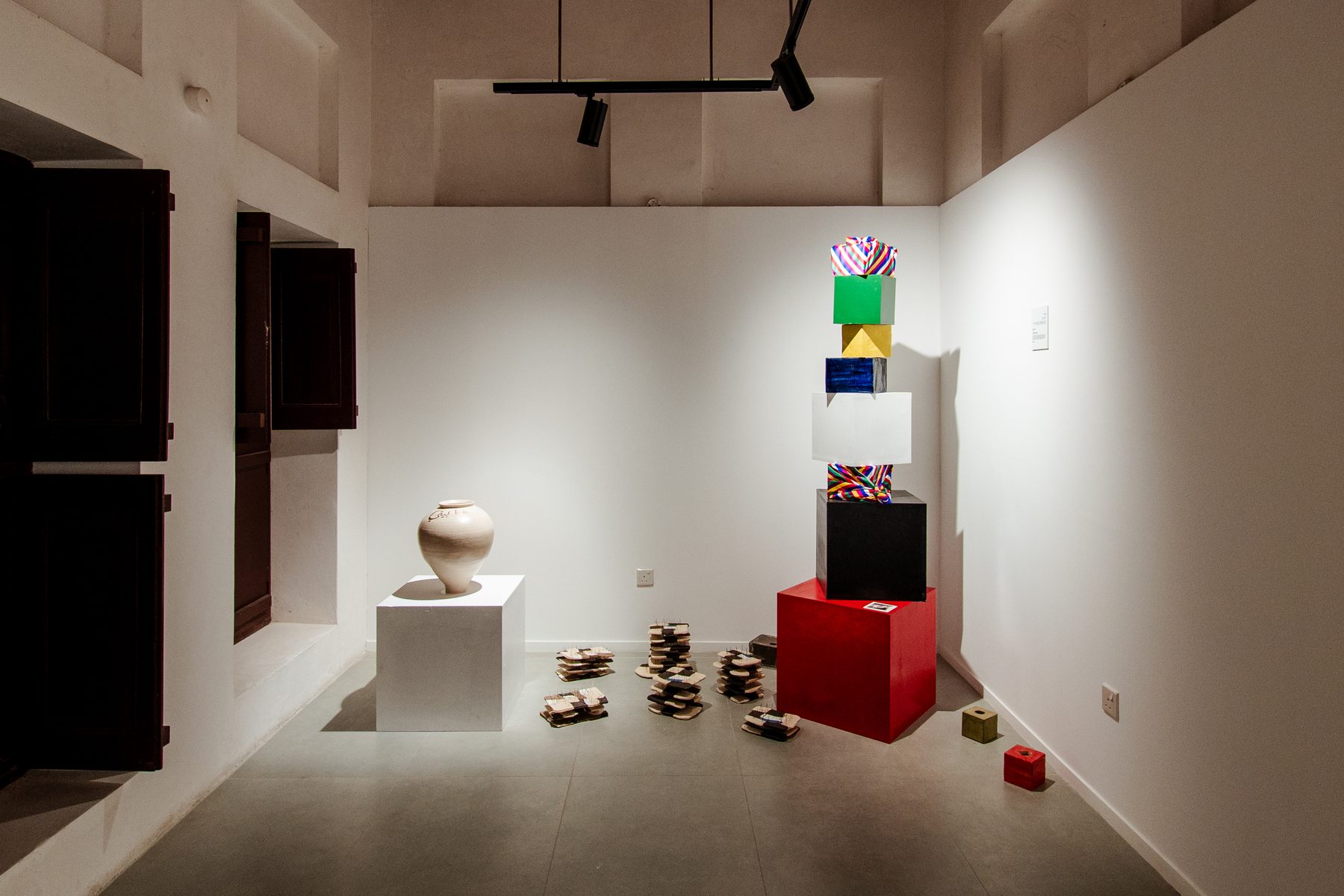
Belonging traced as something shaped through time rather than claimed on arrival. After two decades in the UAE, what once felt unfamiliar gradually became a place capable of holding me. The moon jar figures the self that arrived — seeking shelter, testing balance. A final totem stacks cubes in UAE national colors and Obangsaek, some wrapped in Sakdong fabric. Coexistence not as assimilation, but as sustained alignment between where I came from and where I chose to remain.
Moon Jar
Fragments
Totem
2025
Ceramic, Metal · 26 × 103 cm
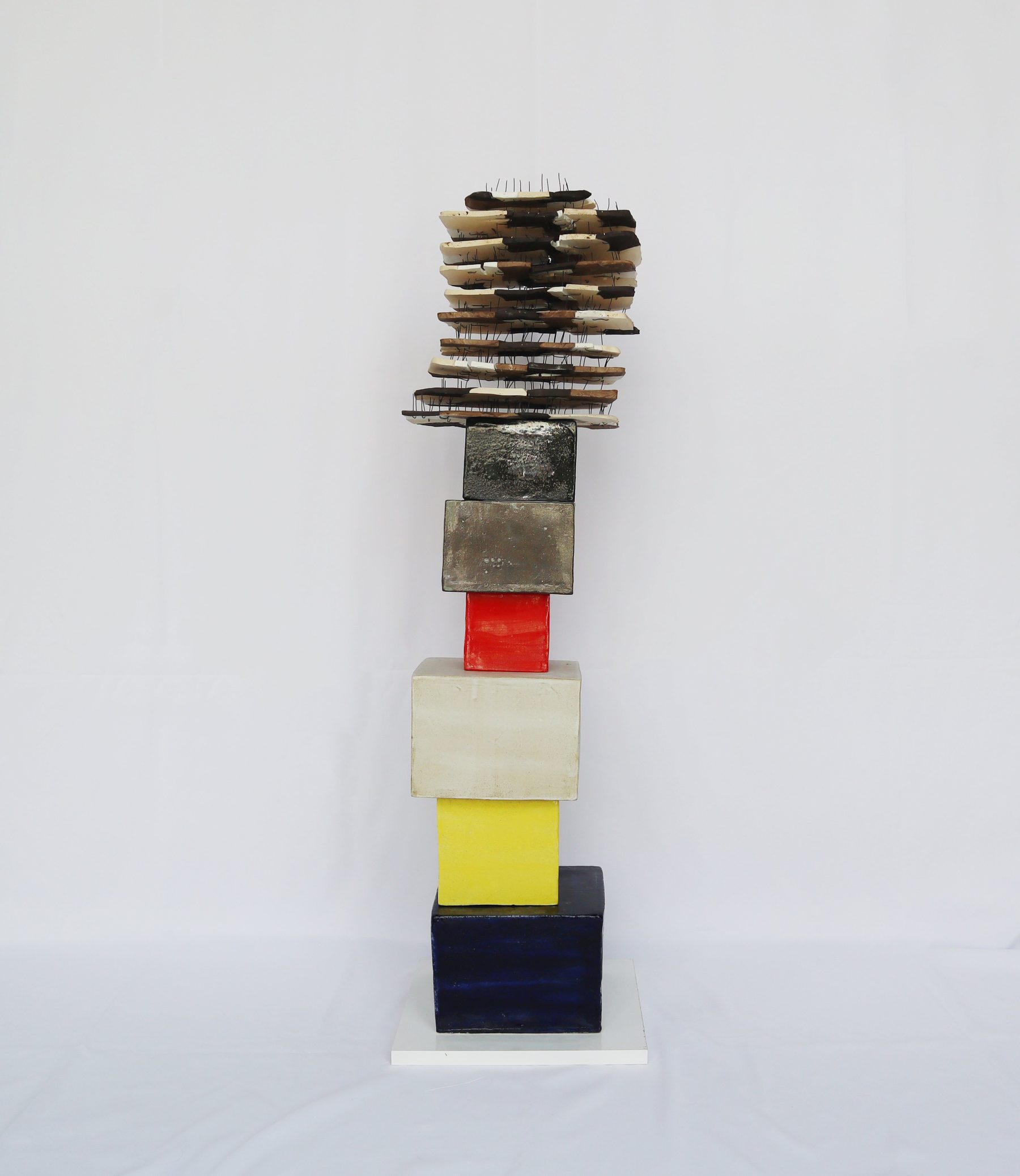
Built from modular ceramic cubes in Korea's five cardinal colors, organizing identity through a color-coded system. Layered fragments, wired and stacked, form a vertical structure that holds memory as material evidence.
2024–2025
Ceramic · Multiple dimensions
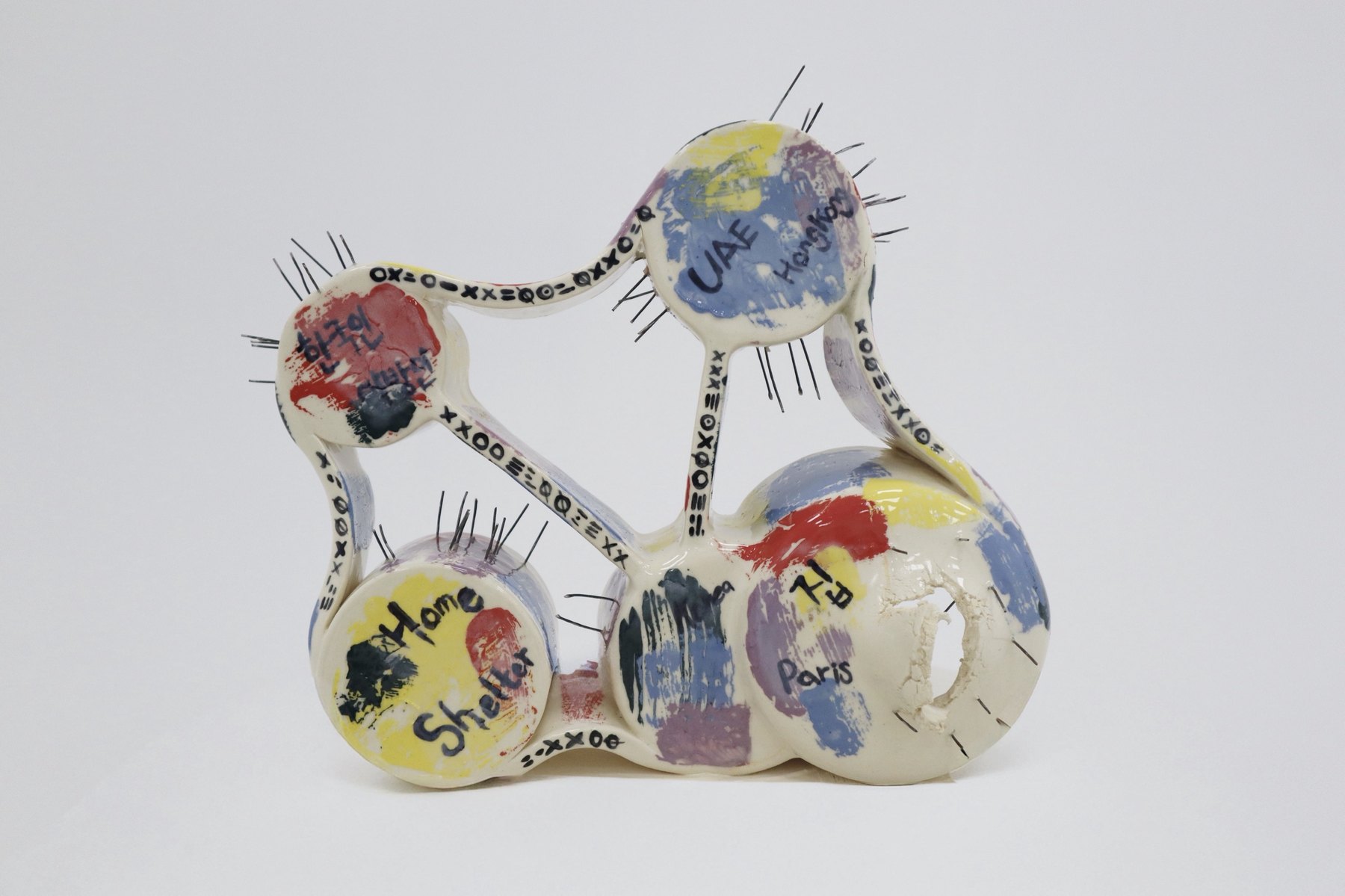
Reinterprets Korean patchwork tradition as a language of identity. Each seam remains visible — not as decoration but as evidence of continuity within fracture. Care, time, and belonging contained in form.
No. 2
No. 3
2026 · DIFC Art Nights
Ceramic · 20 × 20 × 20 cm
Traces the shifting nature of memory through the surface of a vessel form. Layers of glaze and raku-fired marks register moments that fade, return, and transform over time — fluid, partial, continuously reconfigured.
2024
Ceramic · 21 × 21 cm
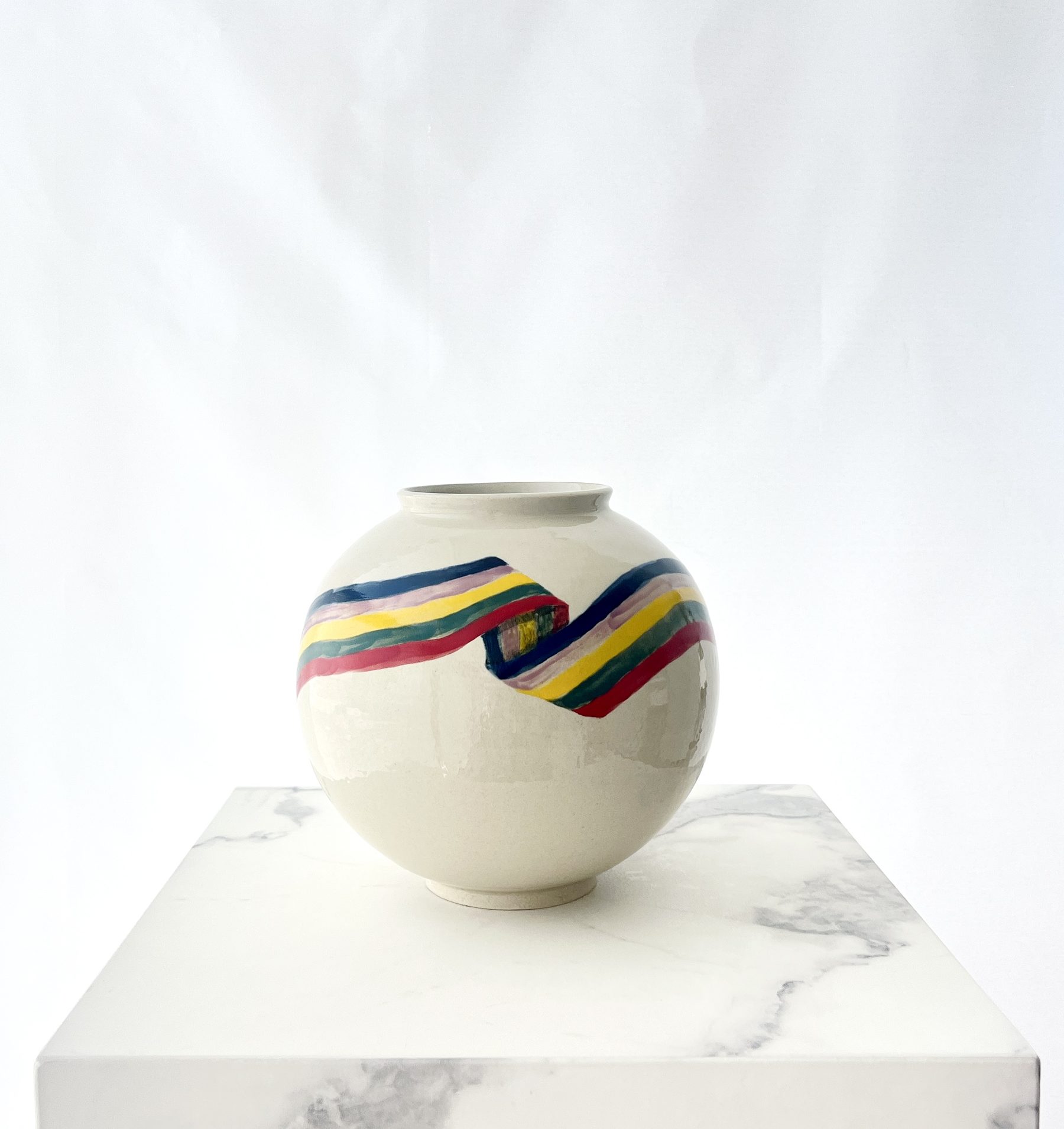
Abstract dance gestures painted in vibrant Saekdong colors on a white Korean moon jar. Balancing movement and stillness — an invitation to find one's own meaning shaped by memory and perspective.
Yujung Kwon navigates the intersecting boundaries of clay, wire, and textile to visualize 'unseen connections.' For Kwon, the creative process is not merely about repair, but a structural confrontation with the fractures of life.
By reinterpreting the geometric logic of Jogakbo — Korean traditional patchwork — through a contemporary lens, she weaves fragmented memories into a singular, resilient support system.
Her practice is evolving into modular installations that transform space into a visceral experience of memory and belonging, exploring the tension between permanence and the fluid nature of identity. She is currently expanding this language into installation, creating modular environments in which memory and belonging are encountered as spatial and structural conditions rather than fixed ideas.
A Korean multidisciplinary artist based between the UAE and South Korea, Kwon is currently in residence at the Design Council Abu Dhabi. Before becoming a full-time artist in 2023, she spent over two decades in multinational organizations across the UAE and Hong Kong — a human-centered background that informs the conceptual and structural depth of her ceramic practice.
Exhibitions
Residencies & Mentorship
Education