The Seam
On the development of the work — from the logic of Jogakbo to the seam as method.
My work begins with Jogakbo — the Korean tradition of piecing leftover cloth into a single cloth, where nothing is discarded and every seam is left visible. What drew me was not its pattern but its logic: the seam as the place where separate things are held together, and the join made part of the form rather than hidden.
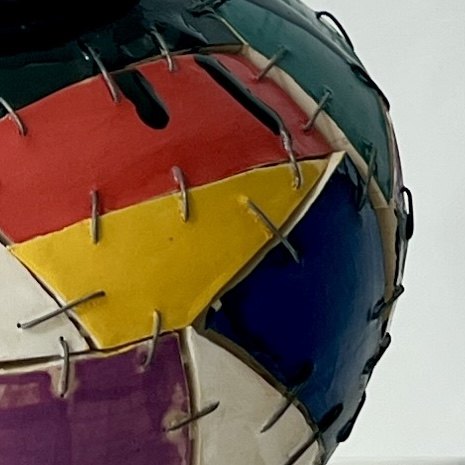
I carried that logic into clay. Self I began the practice — a moon jar split and rejoined with wire, the fracture exposed as structure. From there the Self series pushes the same question: forms completed, then deliberately broken, stitched, and glazed over their seams. Repair stops being a way to restore what was whole and becomes a language of its own.
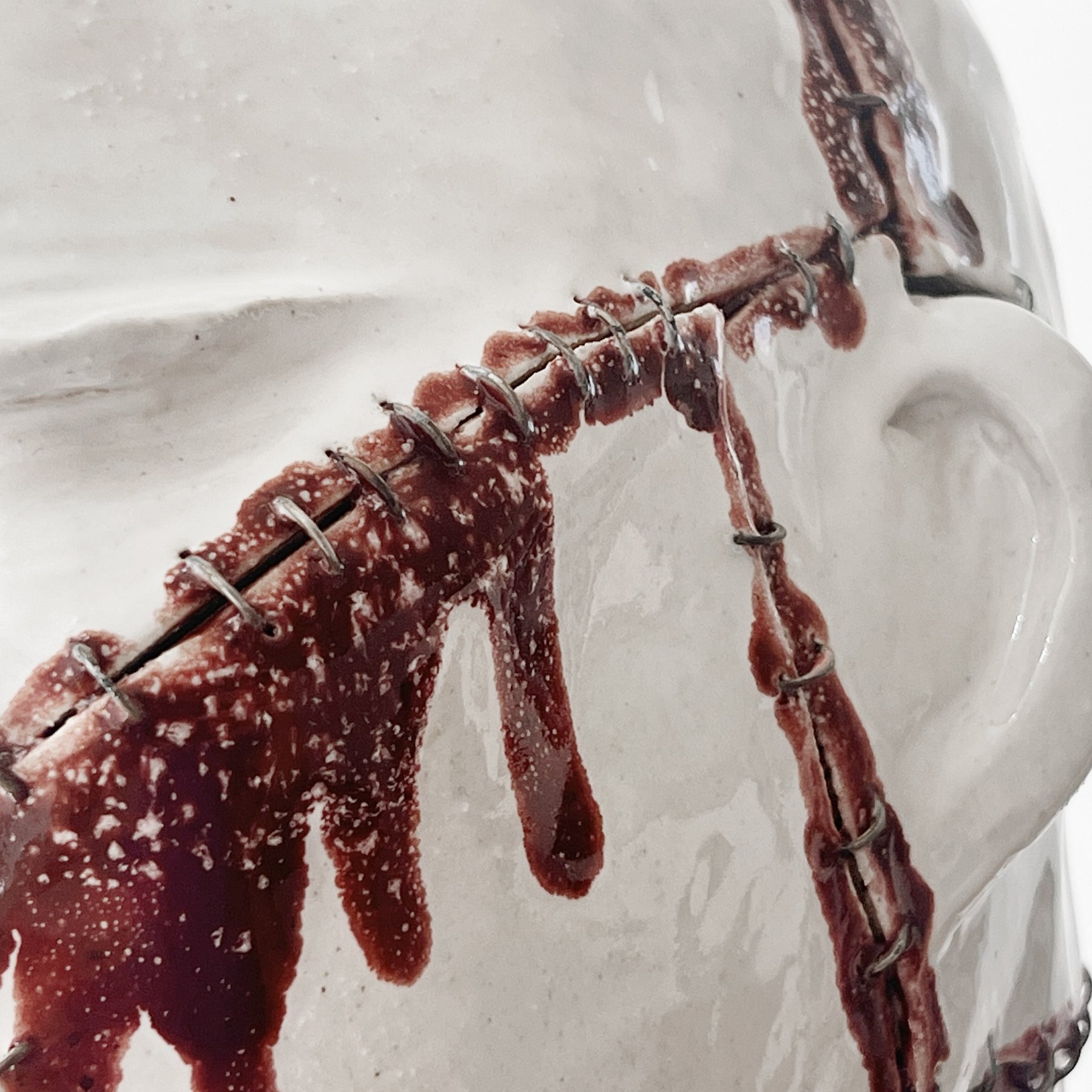
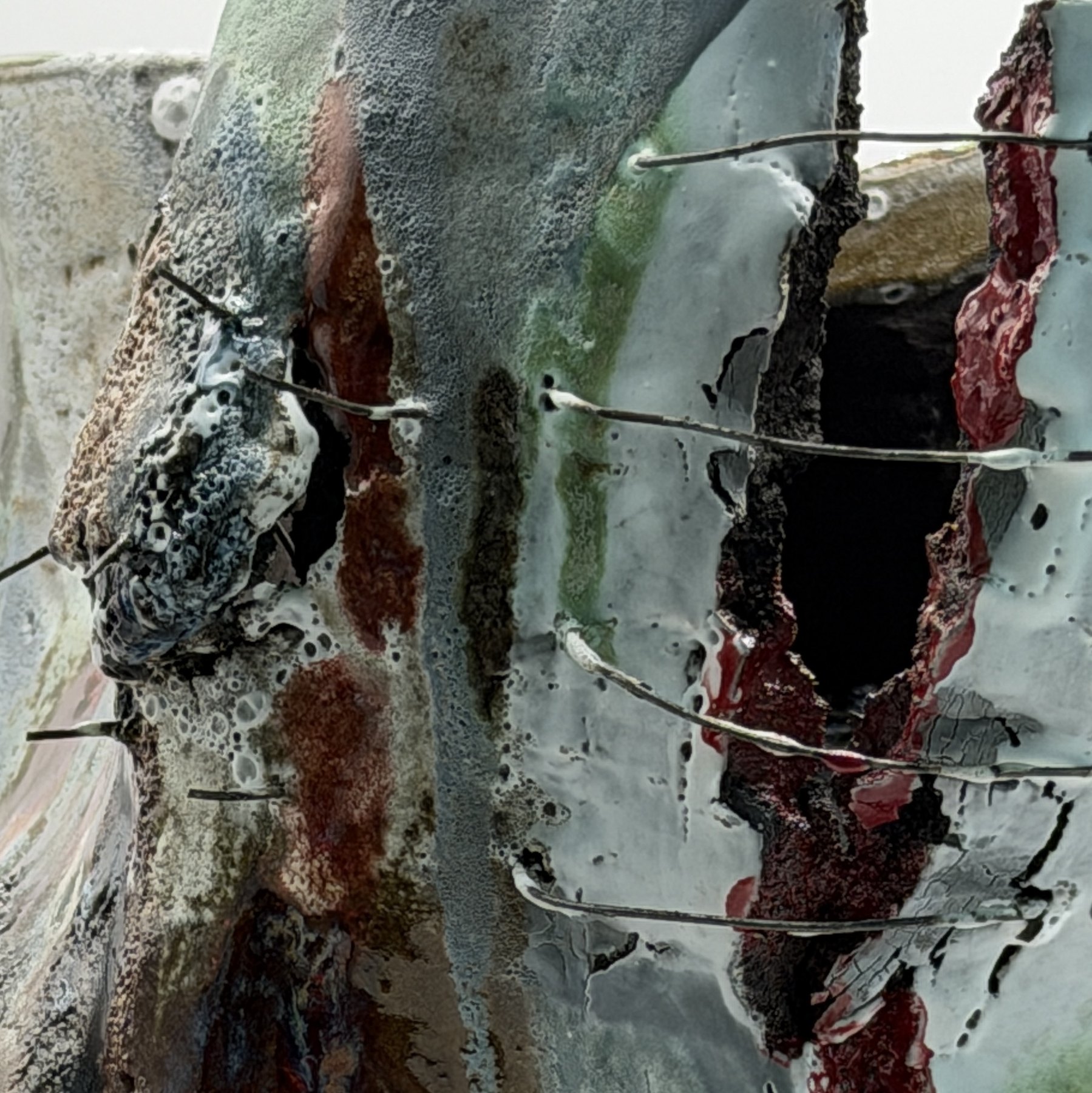
Over time the seam has widened — from the formation of a self to the structures that hold it. Stitched ceramic panels, stacked modular fragments, a moon jar and a totem: these works join two cultural languages, Korean and Emirati, without dissolving either. Belonging, like the cloth, is pieced together over time rather than claimed at once.
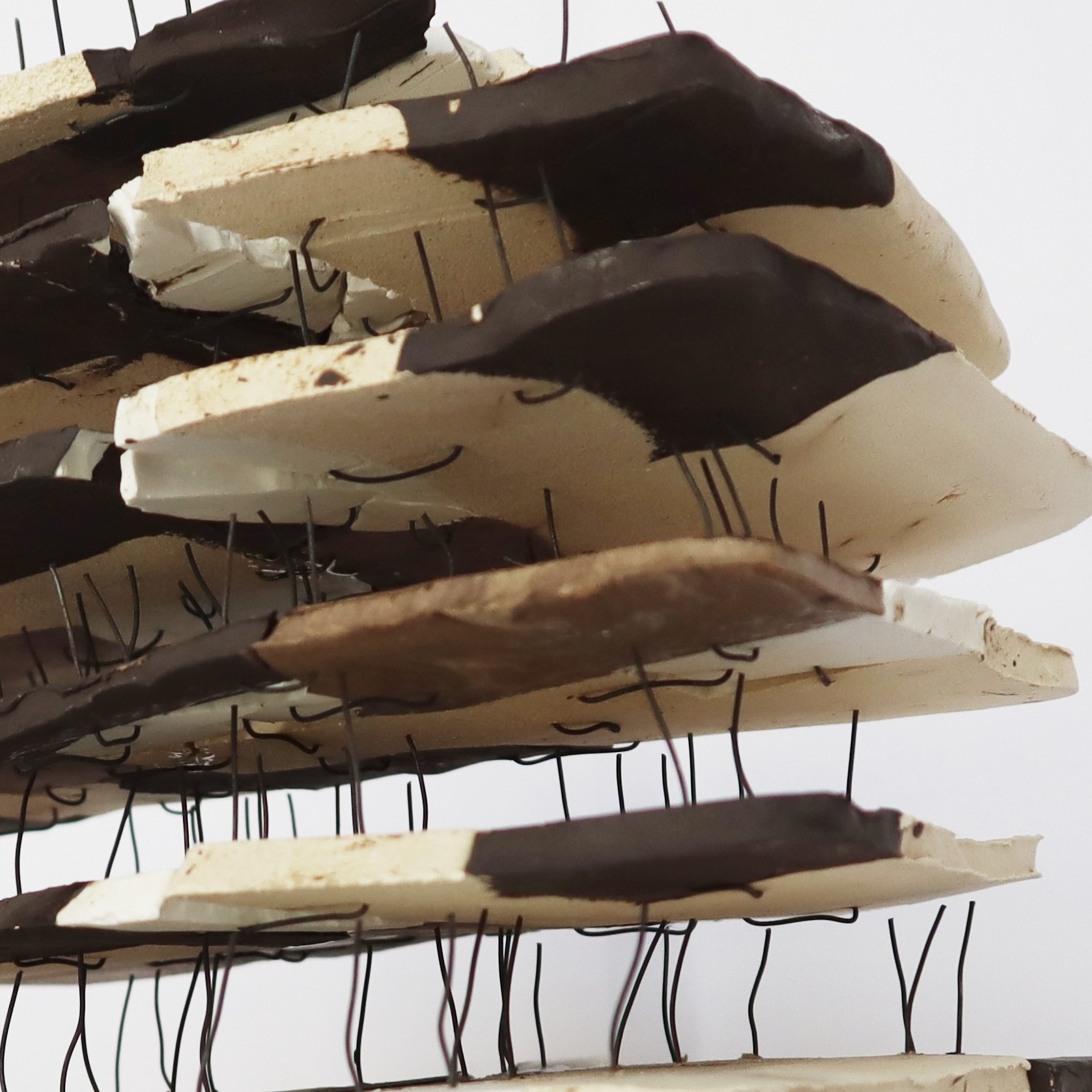
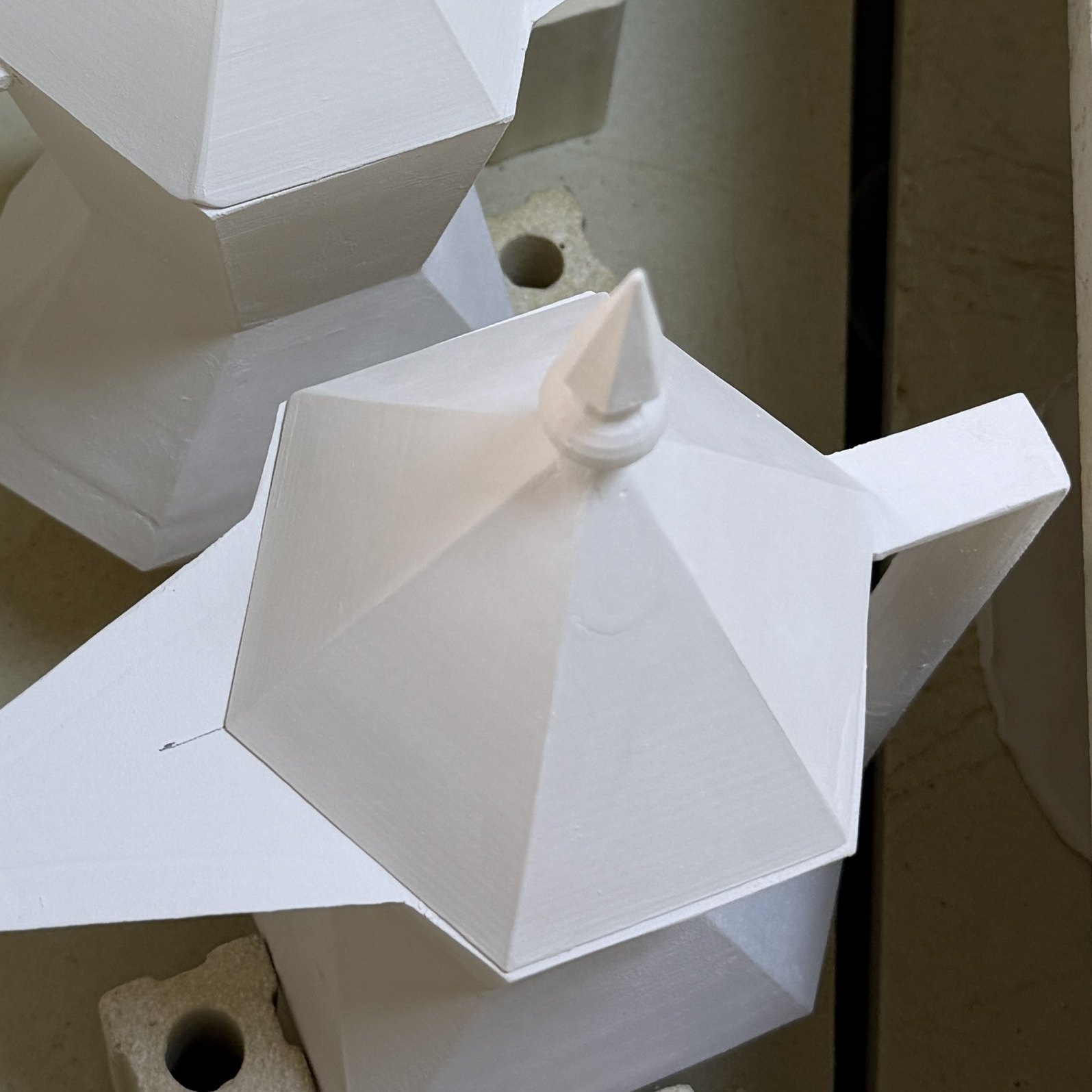
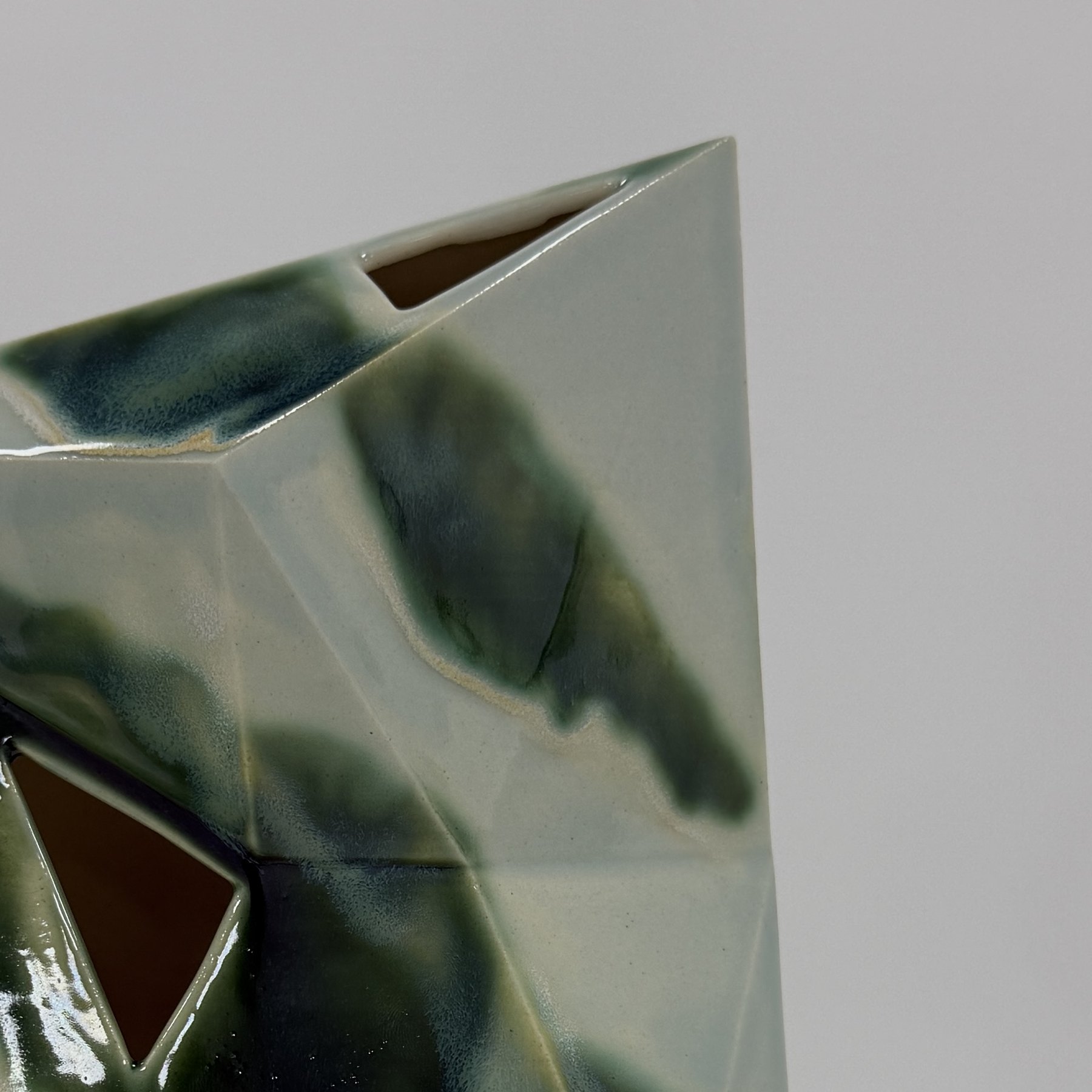
Most recently the seam extends across three traditions — Korean Jogakbo, Emirati hospitality, Italian craftsmanship — held in relation without fusion. Faceted forms translate the logic of the seam into a new language, carried from the bare body of the clay through to the glaze.
The join remains visible. It is where the meaning lives.